
Most people day trip Granada. They drive up from the Costa del Sol in the morning, spend a few hours at the Alhambra, and drive back to their hotel on the coast in time for dinner. It is understandable. I think it is also the wrong way to do it.
Essential Insights from the Granada Spain Travel Guide
Granada is one of the most extraordinary cities in Spain and the Alhambra is only part of the reason. The Albaicín neighborhood, the Mirador de San Nicolás at golden hour, the Moorish tea houses, the city after the day visitors have gone home — none of that fits into a day trip. We stayed two nights on our recent Curated Journeys trip and came back wishing we had booked three. Here is everything you need to know in this Granada Spain travel guide.
THE DRIVE UP FROM THE COAST
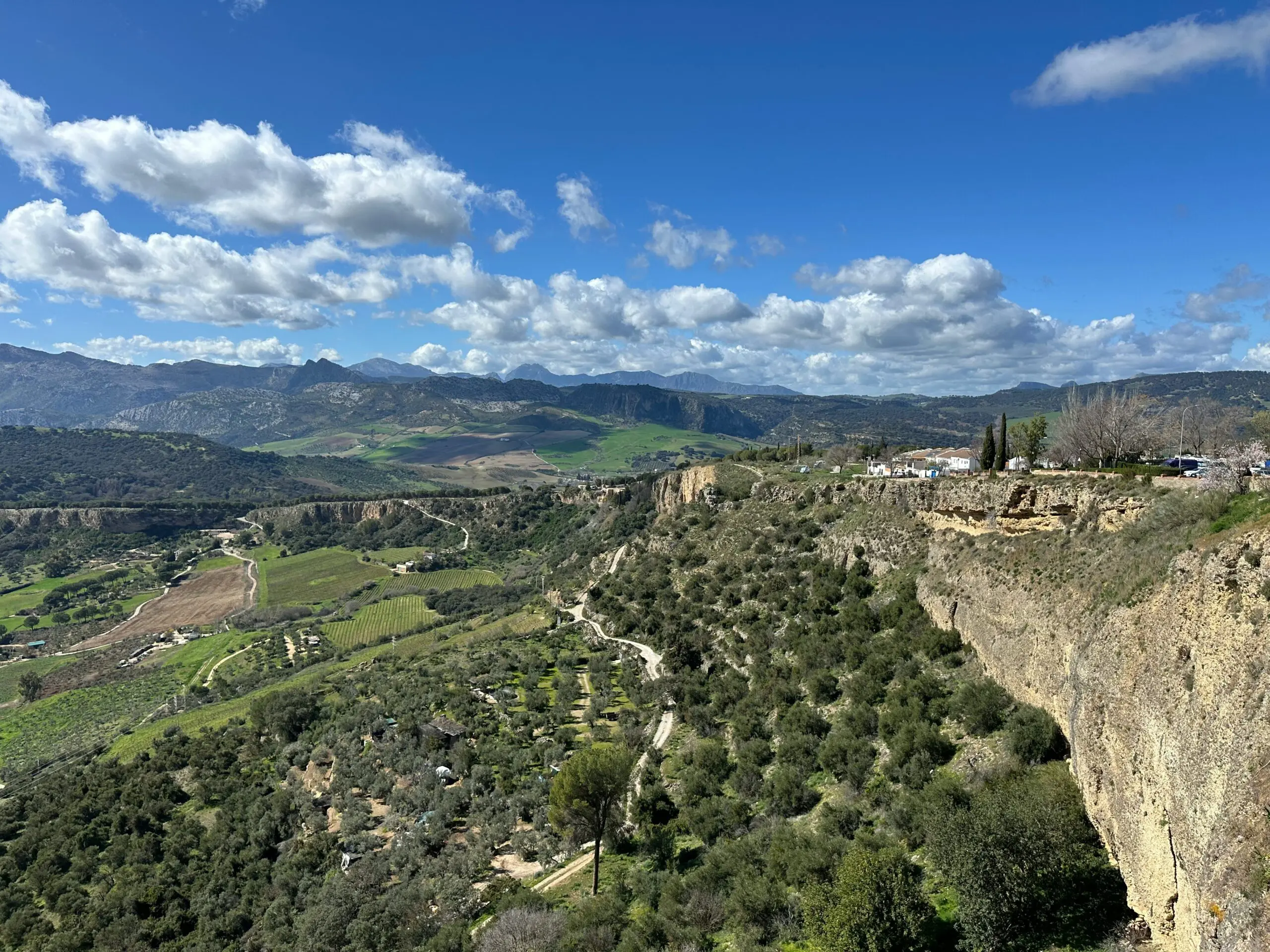
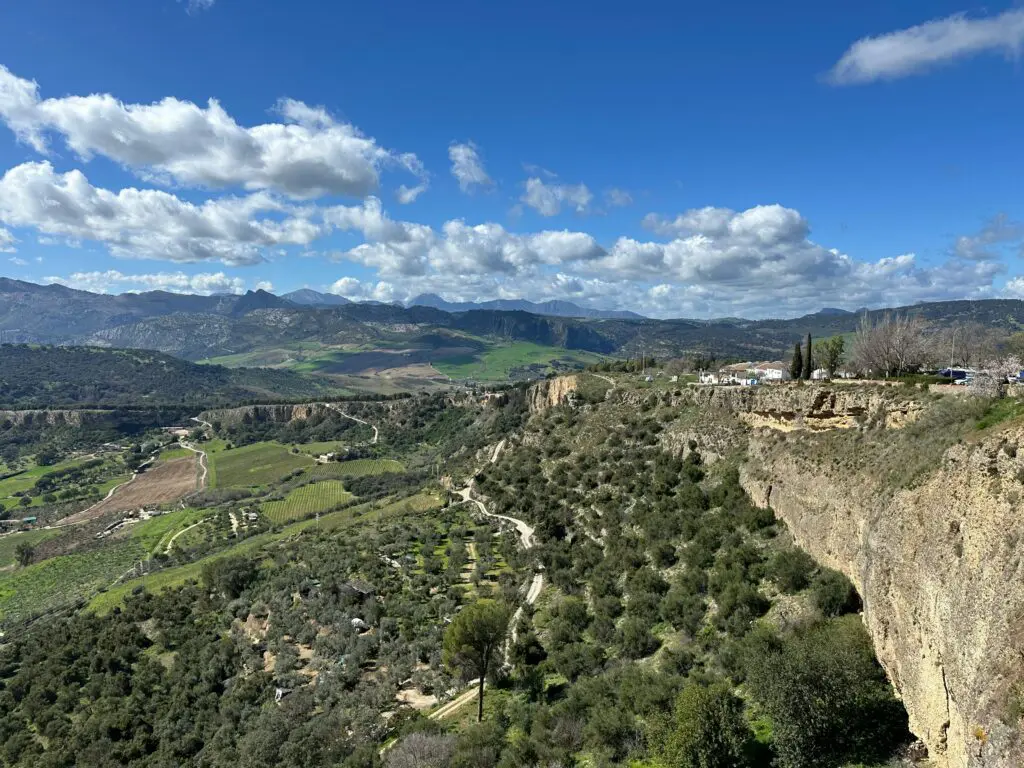
If you are coming from the Costa del Sol, the drive to Granada through the mountains is worth calling out specifically because it is genuinely beautiful and most people spend it staring at their phone.
What struck us on the drive up was the olive trees. Almost every hillside, as far as you can see in every direction, is covered in them. Andalusia produces more olive oil than anywhere else in the world and driving through it you believe that completely. The landscape shifts as you climb from the coast into the mountains and by the time you arrive in Granada the city feels like it belongs to a completely different world from the one you left behind on the Mediterranean.
BOOK THE ALHAMBRA BEFORE YOU DO ANYTHING ELSE
Before we go any further, one non-negotiable: book your Alhambra tickets the moment your travel dates are confirmed. Not a week before your trip. Not a month before. The moment your dates are confirmed.
The Alhambra is one of the most visited sites in Europe and the tickets, particularly the timed entry slots for the Nasrid Palaces, sell out months in advance. Your slot is fixed at the time of booking. If you miss it on the day, you miss the Nasrid Palaces entirely. The rest of the complex is still accessible but the palaces are the main event and they are behind a timed entry system for good reason.
We booked our visit at 11am. We arrived at 10:00. We were grateful we had built in that buffer.
THE GENERALIFE GARDENS
Most visitors rush through the Generalife on their way to the Nasrid Palaces. Do not do this. Give the gardens time.
The Generalife was the summer palace and retreat of the Nasrid sultans and the gardens are built around a series of water features, channels, fountains, and reflecting pools all fed by an irrigation system the Moors engineered centuries ago. The Patio de la Acequia, the long central canal courtyard, is the centerpiece and it is as beautiful in person as every photograph suggests.
What no photograph captures is the smell. Orange trees everywhere. If you have ever ridden Soarin’ Over California at Disneyland and hit the orange grove scene, that is exactly what walking into the Generalife smells like. It catches you off guard in the best possible way.
The Escalera del Agua and the Patio del Ciprés de la Sultana are worth finding even if they are slightly off the main path. Take your time in here. The Nasrid Palaces will be waiting.
THE NASRID PALACES
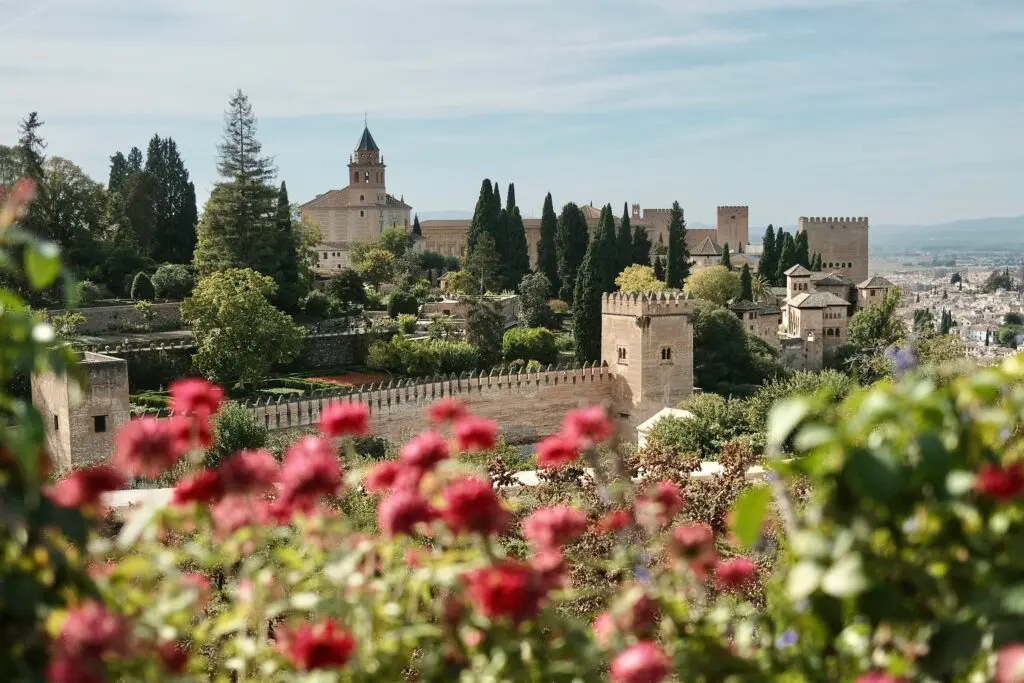
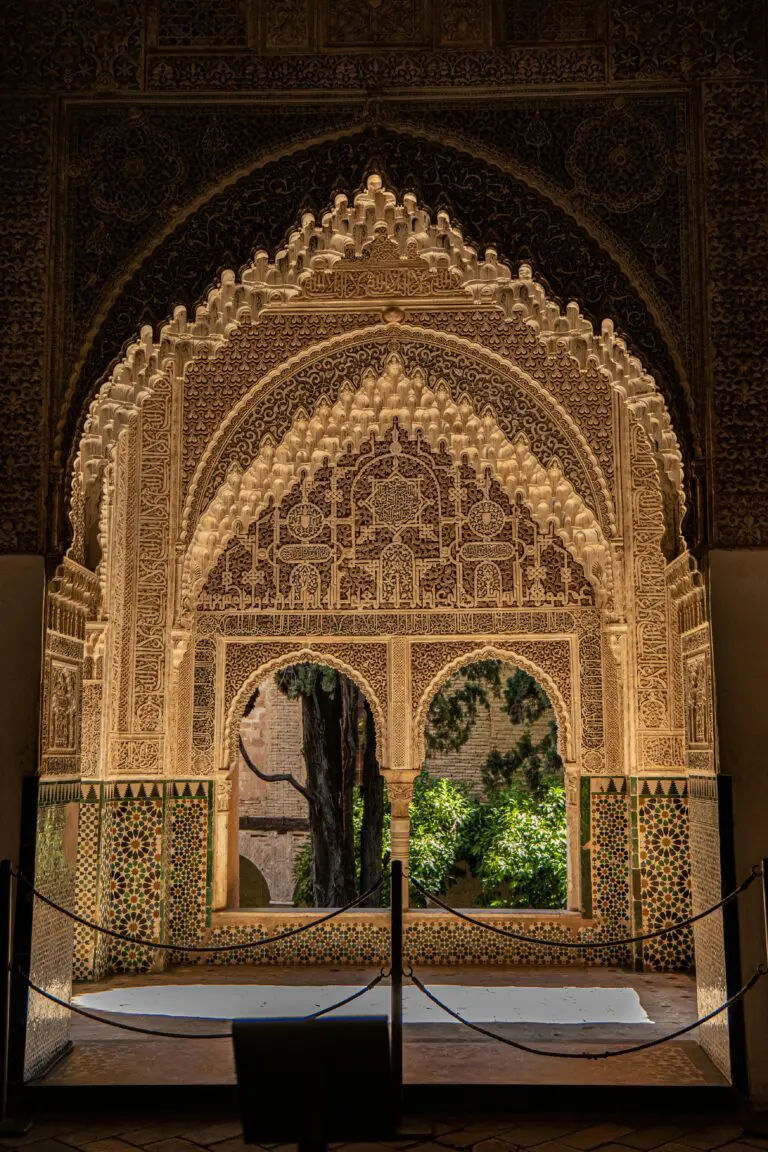
The Nasrid Palaces are the heart of the Alhambra and the reason you booked your tickets months in advance. The Mexuar Room, the Patio de los Arrayanes with its long still reflecting pool, the Sala de los Abencerrajes, the Sala de los Reyes, the Court of the Lions: room after room of extraordinary plasterwork, geometric tilework, carved wooden ceilings, and Arabic calligraphy that covers every surface.
The craftsmanship is extraordinary. The scale is overwhelming. And there is something else here that takes longer to process.
The Alhambra was a Moorish palace, one of the greatest examples of Islamic art and architecture in the world. When the Catholic Monarchs took Granada in 1492 and the Christian reconquest of Andalusia was complete, much of what existed here was altered, covered over, or replaced. You see it throughout the complex. Christian symbols imposed onto Moorish spaces. A baroque cathedral inserted into the center of a mosque in Córdoba. Art that replaced what was there before.
The work that replaced it is not without merit. But standing in rooms that were once covered in vibrant color and intricate Moorish decoration, now faded or altered, you feel the weight of what was lost. The Sala de los Reyes has ceiling paintings depicting Christian knights installed in a room that was once purely Moorish. The contrast is stark and uncomfortable in a way that is worth sitting with.
The Alhambra is one of the most beautiful places I have ever been. It is also one of the most humbling. Both things are true at the same time.
THE PALACIO DE CARLOS V AND THE MUSEO DE LA ALHAMBRA
The Palacio de Carlos V is a Renaissance palace built by the Holy Roman Emperor Charles V directly in the middle of the Alhambra complex in the 16th century. It is architecturally impressive on its own terms but standing next to the Nasrid Palaces the contrast is stark. It houses a small museum with original artifacts from the Alhambra including tilework, ceramics, and carved panels. If you are processing everything you have seen in the palaces, the museum gives you a quieter moment to look at individual pieces up close.
THE ALCAZABA
The Alcazaba is the oldest part of the Alhambra, the military fortress that predates the palaces by centuries. My travel companion Tavia climbed the Torre de la Vela, the main watchtower, and the views over Granada and the surrounding mountains including the snow-capped Sierra Nevada are spectacular. The climb is not easy but the payoff is worth it.
THE ALBAICÍN
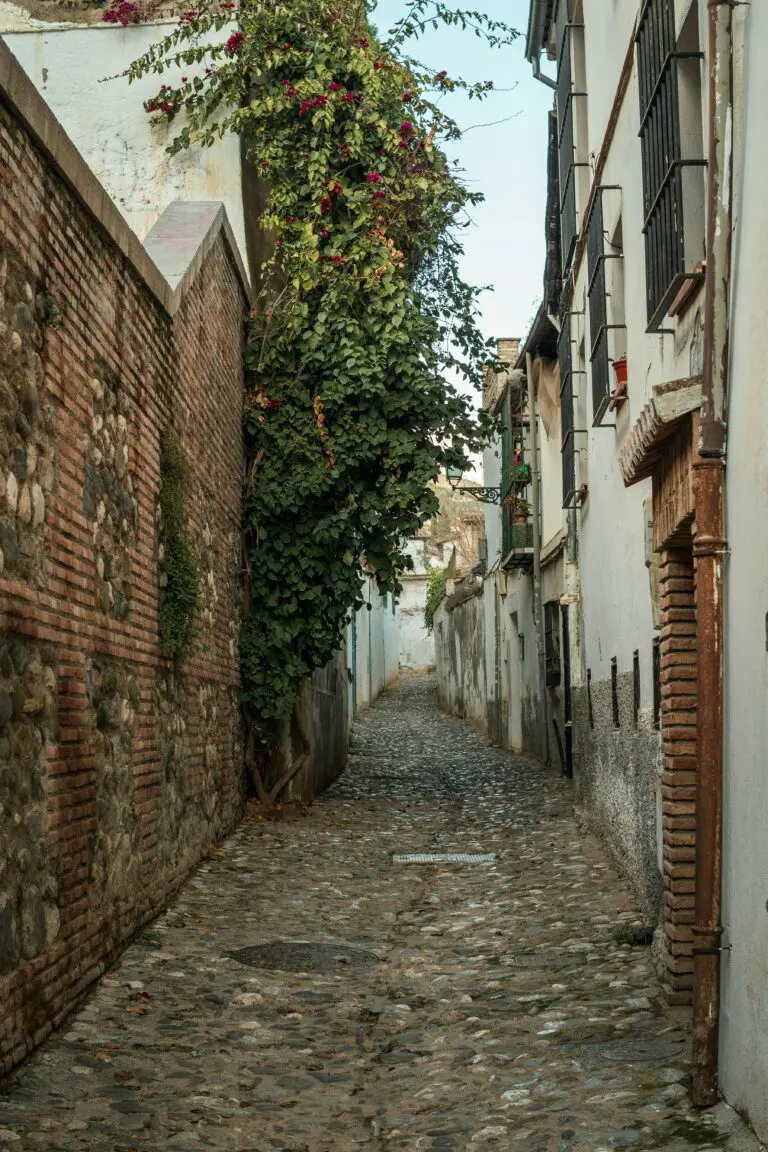
Here is where the overnight stay argument becomes undeniable. The Albaicín is the old Moorish quarter of Granada, a neighborhood of whitewashed houses, narrow cobblestone lanes, Moorish tea houses, and North African influenced shops and restaurants climbing the hillside across the valley from the Alhambra. It is one of the most atmospheric neighborhoods in Spain and it is completely inaccessible to the day tripper who arrives at 9am and leaves at 5pm.
We spent a Sunday evening wandering the Albaicín after the day visitors had gone and the neighborhood felt entirely different. The streets were quieter, the tea houses were full of locals, and the whole place had an unhurried quality that a daytime visit simply cannot replicate.
The Alcaicería, the old Moorish silk market at the base of the Albaicín near the Cathedral, is touristy by day but worth a wander. We picked up some Turkish treats and tea which felt exactly right after the day we had had.
THE MIRADOR DE SAN NICOLÁS
Go to the Mirador de San Nicolás. Arrive by 5pm. Bring patience and a camera.
The Mirador is a viewpoint in the Albaicín that looks directly across the valley to the Alhambra, with the Sierra Nevada visible behind it. At golden hour, when the late afternoon light hits the palace walls and the mountains glow behind them, it is one of the most extraordinary views in Europe. Full stop.
There will be street musicians playing. There will be a crowd. None of that diminishes it.
The Alhambra lit up across the valley against the darkening sky after the sun goes down is also worth staying for. That view only exists for overnight visitors. It is a significant part of why we recommend staying two nights rather than one.
PRACTICAL TIPS BEFORE YOU GO
- Book the Alhambra the moment your travel dates are confirmed. This cannot be emphasized enough.
- Your Nasrid Palace timed entry slot is fixed. Arrive at least 20 minutes before your slot. Missing it means missing the main event.
- Download an audio guide before you leave home for the Alhambra specifically. The context for each room changes the experience significantly and you will not always have reliable WiFi inside the complex.
- The Albaicín is best in the evening. If you are only there for a day trip, the afternoon is your window.
- The Mirador de San Nicolás at golden hour. 5pm. Be there.
- Granada is about an hour from Málaga by car or two hours by train. Both are straightforward. If you are driving, the mountain road up from the coast is excellent.
- Parking in the Albaicín is difficult. Stay somewhere with parking or use the park and ride systems the city provides.
Granada rewards time and curiosity in equal measure. The Alhambra alone justifies the visit but the city around it, the Albaicín in the evening, the Mirador at golden hour, the tea houses and the narrow streets, adds up to something significantly greater than any single site. Give it two nights. You will not regret it and you will almost certainly wish you had stayed longer.
If you are building an Andalusia itinerary and want to make sure Granada gets the time it deserves alongside Seville, Gibraltar, Málaga, and Córdoba, that is exactly the kind of trip we build at THK Travel Advisors. Every itinerary is completely tailor-made. Reach out at thktravel.com or call us at 408-781-6966 and let’s start planning your journey.